Prelude: shadows on a paper screen
The old storytelling houses of Osaka used to balance a wooden frame over a lantern so that paper silhouettes could flutter against the glowing silk of night. A dozen children on straw mats watched foxes duel samurai, their breath turning to clouds in the winter air. My grandmother said those paper shadows were the first “anime” she ever saw, long before the word existed. If you lean into her memory you can already hear the grammar of modern animation—the illusion of motion conjured by the staccato rustle of washi. Anime, at heart, is a technology of desire: the desire to make stillness move, to make the impossible feel briefly inevitable, to keep the lantern lit just a moment longer. That wish has traveled a century, transforming from paper silhouettes to fluorescent pixels, but the pulse of yearning remains constant.
Celluloid dreams: the early 20th century
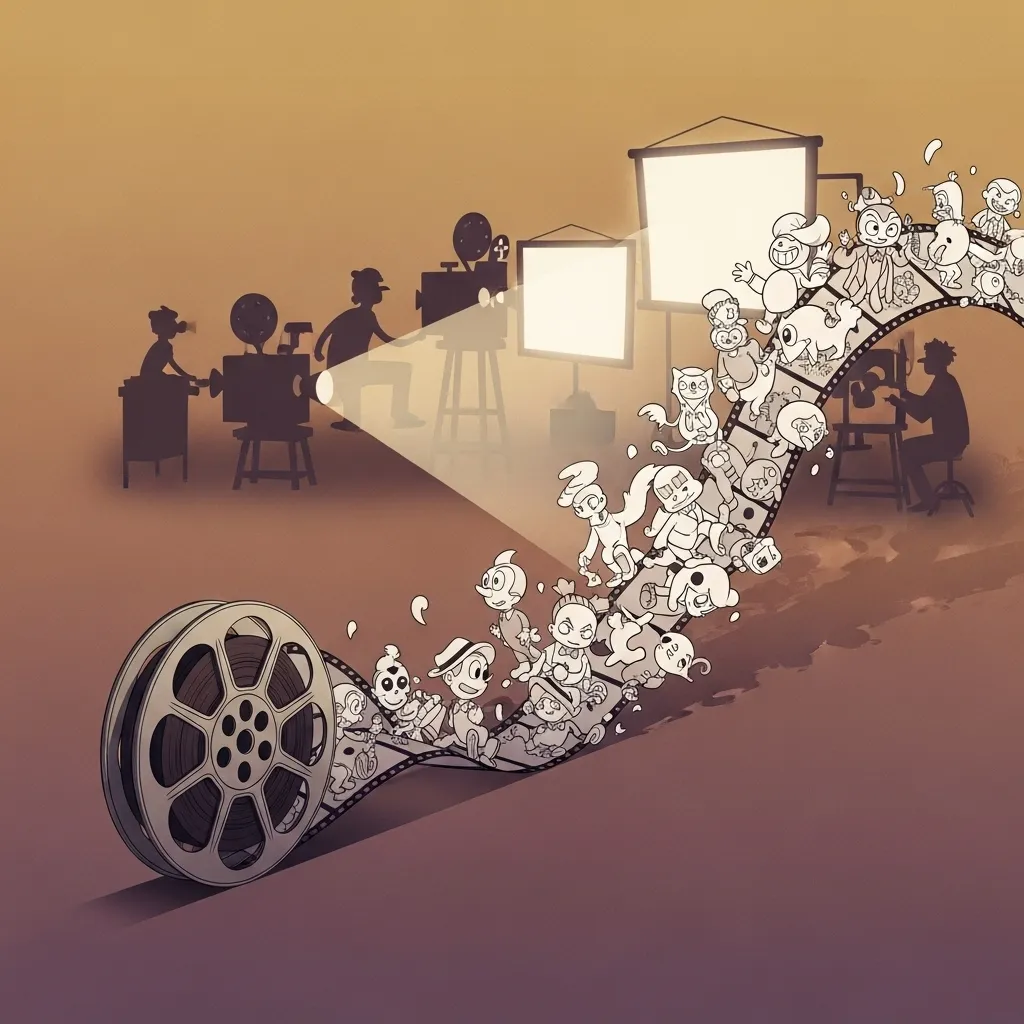
Japan’s first experiments with animated film arrived in the 1910s, when Oten Shimokawa, Jun’ichi Kōuchi and Seitarō Kitayama each produced shorts by painstakingly redrawing charcoal on chalkboards or by cutting figures from paper. Their work was artisanal, almost monk-like in devotion; a few seconds of movement required hundreds of revisions, erasures, do-overs. While the West was already nurturing the studio system, Japanese artists were self-funded artisans operating in cramped tenements. Because nitrate film was expensive, some early reels were washed and reused, meaning a scene of a heroic tengu might disappear forever under the next commercial newsreel. This material fragility bred narrative concision: myths compressed into vignettes, punch lines hurled like snowballs that evaporated the moment they struck the viewer. The loss of much pre-war animation leaves gaps in the historical record, yet the surviving fragments show a stylistic restlessness—already a flair for elastic limbs, swirling clouds, caricatures that oscillated between ukiyo-e elegance and vaudeville slapstick.
Post-war rupture and rebirth
Burnt cities make peculiar incubators for dreams. After 1945, rubble became an open-air studio space where future animators, denied proper classrooms, doodled storyboards on repurposed military maps. Occupation authorities imported American cartoons to serve as soft-power ambassadors; Japanese children laughed at Bugs Bunny while ruins still smoked downtown. Rather than surrender to foreign aesthetics, local artists cannibalized them. One can see traces of Fleischer rubber hose technique in Osamu Tezuka’s 1963 Astro Boy, but the show’s moral core—an artificial child searching for a conscience—mirrors Japan’s own self-interrogation: what kind of nation arises after catastrophic violence? Tezuka’s innovations were as much economic as artistic. He adopted limited animation—recycling backgrounds, panning across painted stills—partly to meet television deadlines, partly to smuggle cinematic composition into the living room. Limited motion paradoxically liberated imagination; the spells were cast in the viewer’s head, between the frames.
Television takes the brush
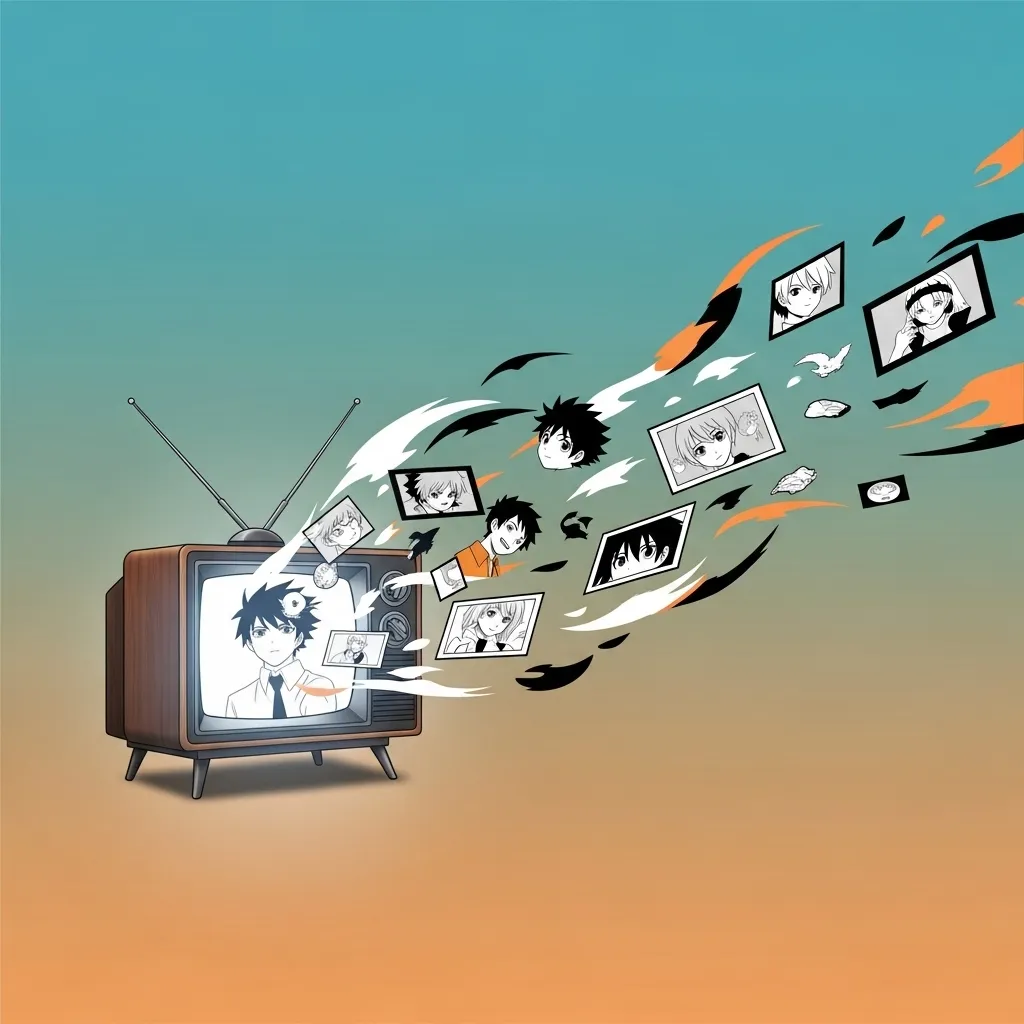
By the 1970s, color television sets bloomed in Japanese households like bright aquatic flowers, and networks demanded weekly content. Studios such as Toei and Madhouse industrialized production, relying on an army of in-betweeners who labored anonymously, often sleeping beneath their desks to chase deadlines. Anime thus became both an art form and an urban lifestyle—ramen-fueled all-nighters, nicotine-stained storyboards, the hypnotic rattle of 16 mm cameras. Genre diversification exploded: mecha epics (Mobile Suit Gundam, 1979) offered political allegory in steel armor; magical-girl series (Sally the Witch, 1966; later Sailor Moon, 1992) reframed empowerment through sequins and tiaras. Crucially, these shows embedded merchandising loops—plastic models, candy toys, stationery—into narrative DNA, teaching an entire generation to love stories with their wallets. Anime’s aesthetics of hybrid consumption blurred art and commodity in a way that baffled contemporaneous critics but presaged the transmedia franchises of our century.
The otaku arc: fandom as co-author
In 1983 the science-fiction convention DAICON IV opened with an amateur animated film made by college students who would later found Studio Gainax. The short compressed an encyclopedic montage—from E. E. Smith’s lens-flares to Godzilla stomps—in under six frenetic minutes, celebrating a new creature: the otaku. Marginalized in mainstream media as hermits hoarding figurines, otaku reconstituted the social contract around obsession. Fanzines, tape-swapping circles and, eventually, the vast agora of Comiket allowed fans to write parallel universes where minor characters claimed center stage, or alternate endings redeemed tragic heroines. Fandom thus performed a quiet coup: authorship became echoic, iterative. When Neon Genesis Evangelion (1995) fractured mecha tropes into existential therapy sessions, fans answered with interpretations braided from Kant, Kabbalah and classroom gossip. The show, unfinished in its own creator’s eyes, became complete only in the communal murmuring that followed. Anime, once a broadcast, was now a feedback loop.
Digital turn and the collapse of frames
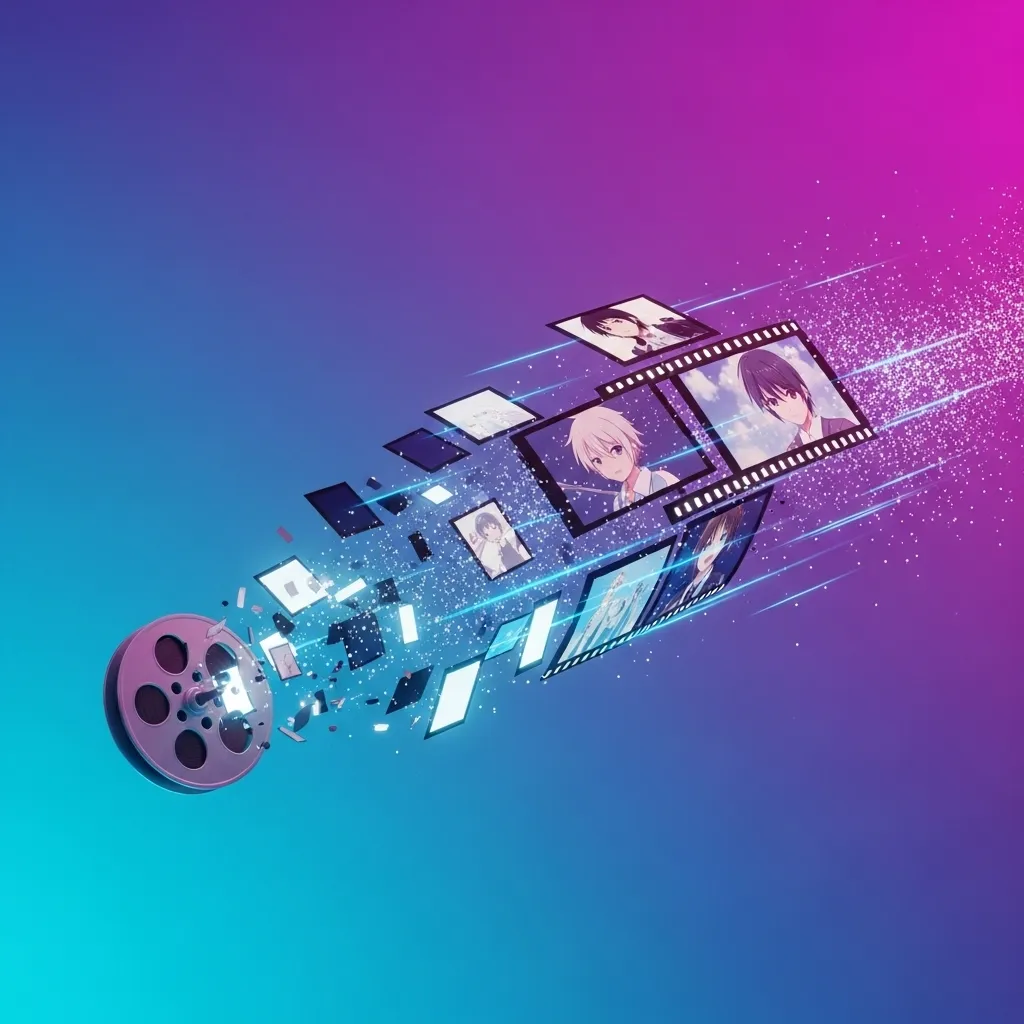
Hand-painted cels vanished quickly after the millennium. Software such as RETAS and later Adobe Animate allowed studios to color, composite, even puppet characters within the same temporal sandbox. Digital workflows accelerated schedules yet introduced new anxieties: suddenly every stroke could be undone, every shade shifted. Some animators mourned the tactile ritual of acrylic paint that dried under aging fluorescent lamps. Others embraced the new plasticity, engineering camera moves impossible on multiplane rigs. Satoshi Kon’s Millennium Actress (2001) and Madhouse’s later Paprika (2006) splice realities by sliding seamlessly across diegetic layers, a maneuver uniquely suited to digital compositing. Meanwhile, domestic broadband broadened distribution; fansub groups circumvented region locks, creating grey-market subtitles within days of an episode’s broadcast. Copyright lawyers growled, but the international audience, especially in Latin America and Europe, swelled beyond any marketing prediction. A paradox emerged: infringement fueled evangelism, which in turn inflated global demand for legal access.
Global flows, cultural feedback
By the 2010s, anime conventions in Los Angeles, Paris and São Paulo drew crowds rivaling rock festivals. Cosplayers arrived like emissaries from parallel timelines, their costumes handcrafted pilgrimages. This global embrace fed back into production. Kyoto Animation’s Silent Voice (2016) treats disability with a tenderness likely informed by worldwide discourse on inclusion; Wit Studio’s Attack on Titan deploys allegories of nationalism that resonate uncomfortably across continents where populism is resurgent. Simultaneously, overseas creators returned influence: the French-Japanese co-production MFKZ (2017) blends Osaka graffiti with Mexican lucha-lore; American director Rodney Rothman cites FLCL’s jump-cuts as a blueprint for Spider-Verse’s kaleidoscopic frame rate. Anime is no longer an export but a conversational partner in a transnational studio jam session. The medium has become the message and the message speaks multiple dialects.
The politics of cute and the aesthetics of trauma
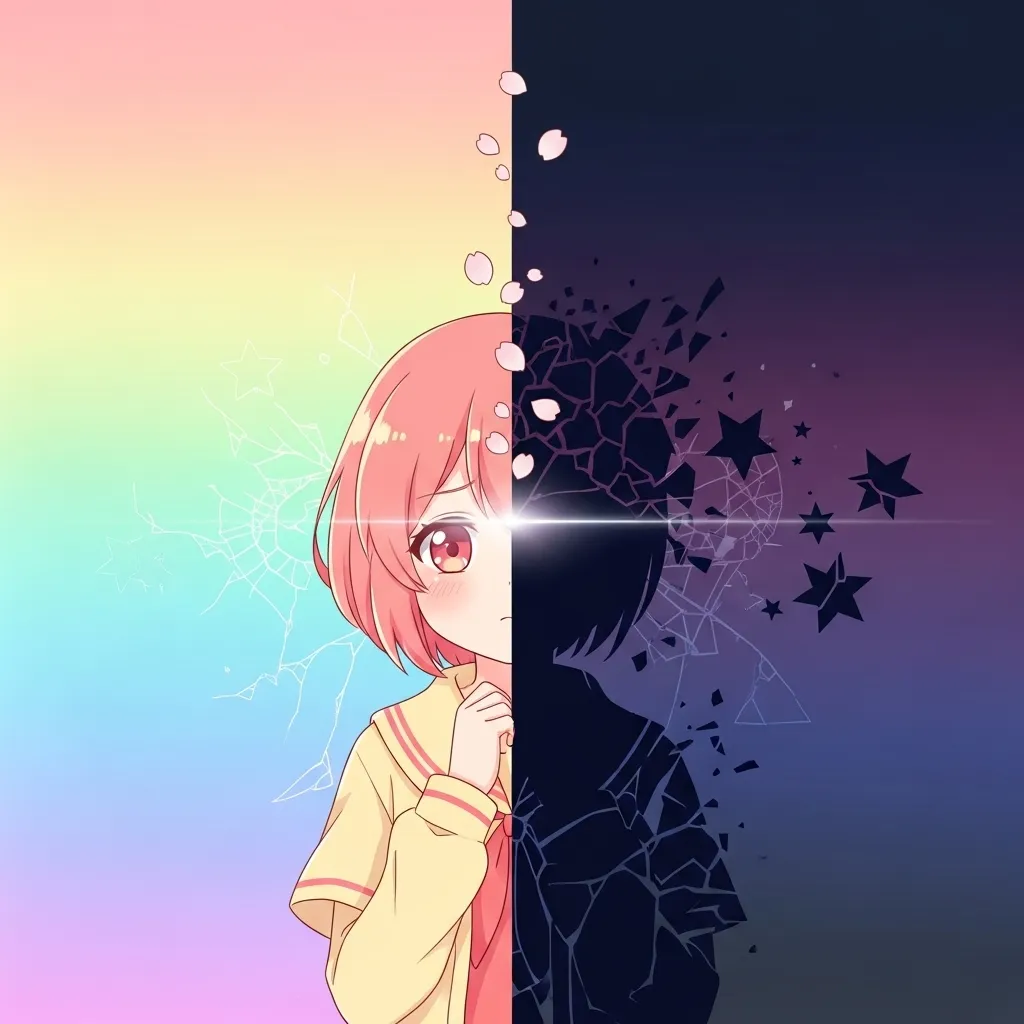
Anime’s stylistic latitude permits the cohabitation of pastel delight and abyssal dread. Kawaii culture packages softness—round eyes, squeaks of delight—but that sugar often coats a medicinal bitterness. Consider Puella Magi Madoka Magica (2011), which detonates the magical-girl contract to expose utilitarian horror; or Made in Abyss (2017), where chibi proportions accompany body-horror dismemberments. This tension is not a bug; it traces back to Edo-period emaki scrolls where playful caricatures abruptly meet spectral apparitions. Japan’s paradoxical post-war status—constitutionally pacifist yet hosting foreign military bases—feeds a cultural imagination where innocence and apocalypse form a Möbius strip. Globally, viewers accustomed to Disney tidy endings find themselves startled, then seduced, by anime’s willingness to withhold closure. The result is a pedagogy of ambiguity, teaching audiences to occupy emotional superpositions: hope and dread, cuteness and cruelty, often in the same frame.
Streaming era: infinite scroll of desire
When Netflix premiered the reboot of Devilman Crybaby in 2018, it released all ten episodes simultaneously, trusting that binge consumption would replace weekly communal anticipation. Algorithms replaced prime-time slots; “because you liked” replaced the broadcast schedule. Production committees adjusted: budgets hewed closer to projected global metrics than to domestic Blu-ray sales. Yet even as streaming platforms promise borderless outreach, they risk flattening cultural eccentricity into data-driven genre compliance. The neon excess of Dororo, the languid ma in The Heike Story, the unsellable weirdness of Sonny Boy—these thrive because producers still gamble on idiosyncrasy. The healthiest future for anime may depend on sustaining pockets of creative anarchy within machine-learning spreadsheets. After all, the first animators drew on chalkboards not because focus groups asked, but because their fingertips itched with visions no one else could see.
Coda: toward a future yet un-storyboarded
The silhouette foxes of my grandmother’s childhood could not predict cloud rendering farms or virtual-production pipelines, yet their DNA survives in every tweened eyelash. Anime’s journey is one of continuous metamorphosis, each technical revolution entwined with shifts in labor, fandom, commerce and politics. Today, students in Nairobi can live-tweet reactions to a simulcast from Tokyo faster than a Shinkansen could traverse Honshu. That immediacy augurs both exhilaration and exhaustion. Will artificial-intelligence tools automate in-betweening, freeing artists for higher flights of imagination, or will they erode the craft into homogenized slurry? History offers a clue: each time the medium seemed destined for compromise—nitrate shortages, television quotas, piracy panics—creators repurposed constraints into styles. Perhaps the future storyboard remains blank not from scarcity but from abundance. The lantern is still lit; the shadows continue their dance. What we choose to draw next is a collective decision, drafted in the negative space between frames.