Prologue – A City Before Sunrise
A little after 5 a.m. the fog is still folded over San Francisco Bay, a layer of quiet gauze through which the lights of the Embarcadero flicker like half-remembered panels from an aged comic. Lacing my shoes, I think of Grant Morrison’s line, “Superheroes are our folk tales — bright, impossible people doing bright, impossible things so we remember we might do them too.” Their presence feels inevitable now, but inevitability is a retrospective illusion. To locate the true beginnings of the superhero we must wander through Depression-era newsstands, wartime barracks, underground zine fairs, and the sketch-littered apartment floors of creators who refused to stay inside the four-colour lines.
Pre-Heroic Currents – Pulp, Myth and Circus Muscle
Long before a cape first rippled across a comic-book cover, raw ingredients had been simmering in popular culture. Penny dreadfuls and dime novels trafficked in masked vigilantes such as Spring-Heeled Jack and Zorro. Newspaper strips gave us the proto-superhuman Phantom. Pulp magazines offered The Shadow, Doc Savage and a rogues’ gallery of trench-coated avengers who wielded automatics rather than ideals. Side-show strongmen posed atop circus posters, their exaggerated biceps foreshadowing tomorrow’s costumed physiques. Even Philip Wylie’s 1930 novel Gladiator, with its bullet-resistant Hugo Danner, feels like a sketch for something greater. These scattered motifs were the way popular consciousness rehearsed for the archetype it was about to conjure.
Big Bang on a Bedroom Desk – The Birth of Superman
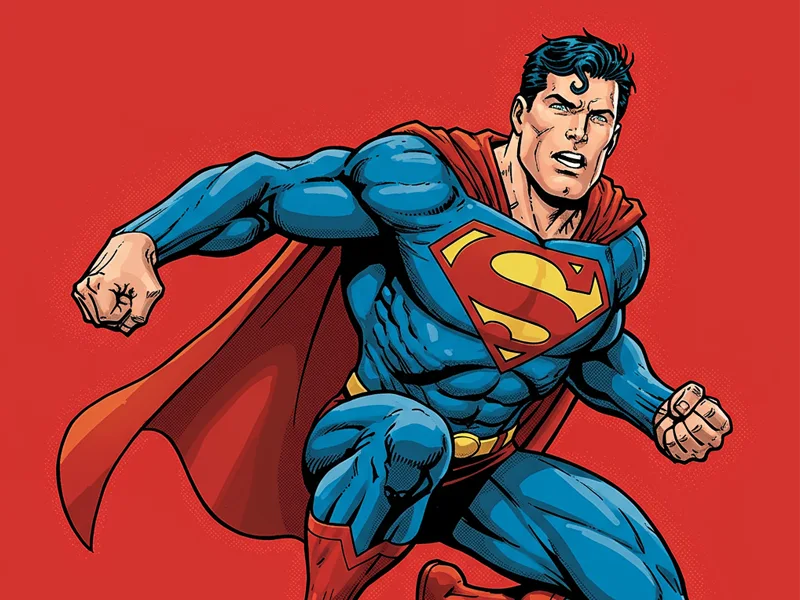
The official “year zero” arrives in June 1938. In a Cleveland walk-up lit by a naked bulb, insomniac writer Jerry Siegel pounded a typewriter while artist Joe Shuster hurried charcoal across bristol board. Action Comics #1 debuted their strange visitor from another planet: Superman. Here, at last, was the fusion — circus muscle meets immigrant dream, pulp vengeance refined into Rooseveltian uplift. Superman’s first adventures targeted slumlords, corrupt politicians and wife-beaters. He leapt; he did not yet fly. Still, the cultural take-off was instant. Within months National Allied Publications (soon renamed DC) scrambled to patent a universe.
The Golden Age – Capes, War Bonds and Contract Traps
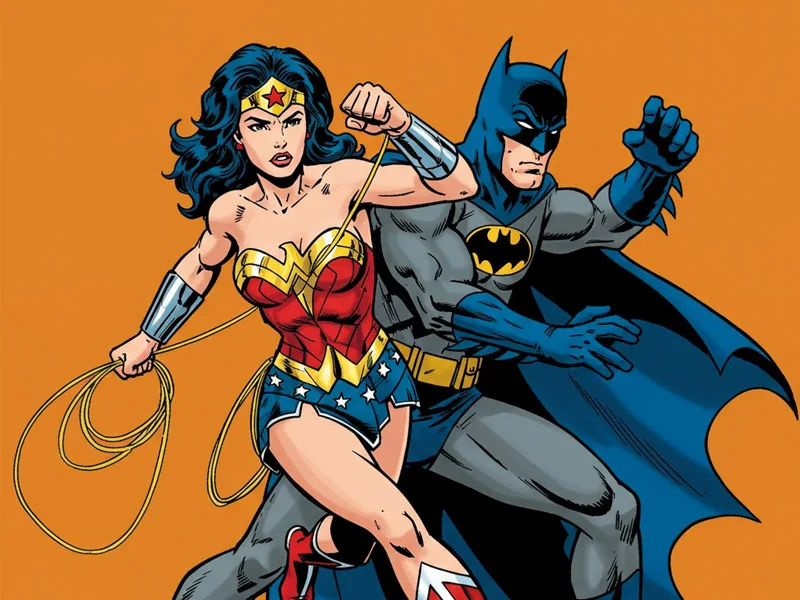
Batman (1939) brought nocturnal catharsis; Wonder Woman (1941) fused feminist promise with Amazonian bondage imagery courtesy of psychologist William Moulton Marston. Flash, Green Lantern and Aquaman quickly followed. Costumed patriots such as Captain America (Timely, 1941) hurled shields at Axis caricatures. Yet gilded panels concealed exploitative contracts. Siegel and Shuster sold ownership of Superman for $130; Joe Simon and Jack Kirby later battled for recognition over Captain America. The Golden Age was thus Gödelian at heart: a system exporting egalitarian fantasy while failing to prove equality within its own factory.
Post-War Unmasking – Decline, Panic, Reinvention
When V-Day silenced air-raid sirens, superheroes lost their clearest villains. Sales dipped; romance and horror rose. Then came psychiatrist Fredric Wertham’s 1954 tract Seduction of the Innocent, indicting comics as juvenile delinquency’s accomplice. Senate hearings ensued. The Comics Code Authority placed a censor’s stamp on every cover, sanitising content and nearly euthanising the superhero. Yet, like Joseph Campbell’s hero cycle, death was prelude. In 1956 DC’s Showcase #4 relaunched The Flash in crimson aerodynamic splendour, signalling the dawn of the Silver Age.
The Silver Age – Science, Suburbia and the Dawn of Marvel
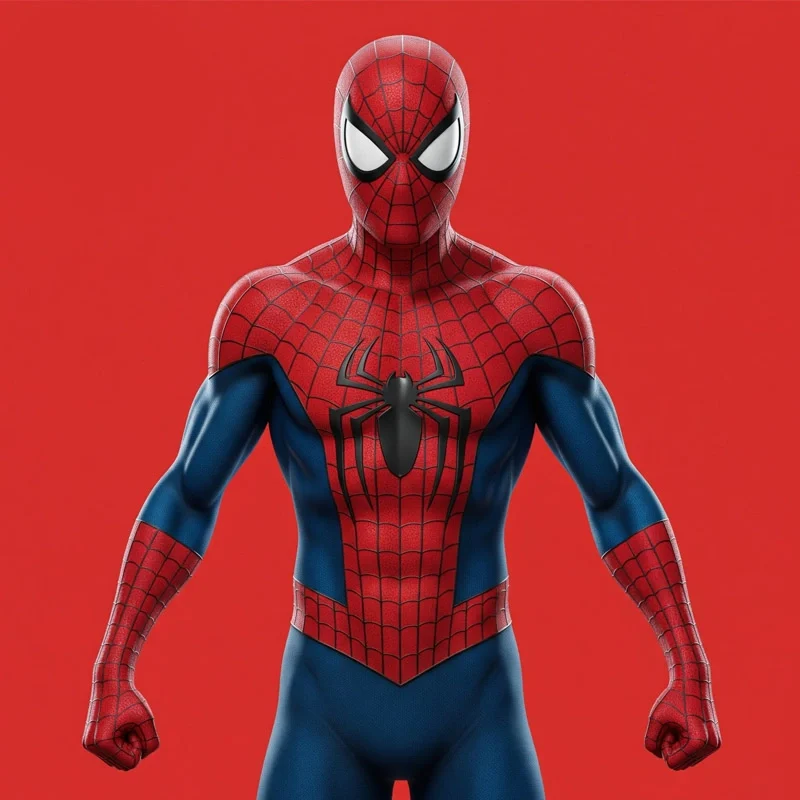
Cold-War iconography seeped into every panel: atomic accidents, alien invasions, parallel Earths. DC’s heroes, rebooted, still resembled Olympian gods gazing down on suburbia. Meanwhile, in 1961, a rechristened Marvel Comics detonated the form. Editor-writer Stan Lee and artist Jack Kirby introduced the Fantastic Four: quarrelsome, recognisably human, headquartered not in Olympus but in a Manhattan skyscraper. Spider-Man (1962) fretted over homework and rent; the X-Men (1963) mirrored civil-rights tensions through the metaphor of mutation. If DC offered mythic stasis, Marvel staged what philosopher Charles Taylor calls “strong evaluation,” dramatizing the moral weight of each choice.
Ethical Growing Pains – From Green Arrow to PTSD
By the late 1960s, urban unrest and televised war pressured both giants to mature. DC’s Green Lantern/Green Arrow road-trip issues tackled racism and addiction; Marvel’s Iron Man confronted alcoholism. Yet the industry’s surface progress belied continued inequity in boardrooms. Here Iris Murdoch’s reminder feels apt: morality is about love, not merely revised rulebooks. The companies preached justice while workers still chased residuals.
Underground and Indie – Cracks in the Four-Colour Wall
Elsewhere, a different rebellion brewed. Underground comix artists — R. Crumb, Trina Robbins, Spain Rodriguez — weaponised cheap mimeographs to explore sexuality, politics and psychedelic consciousness. Their work shattered the Comics Code’s moral monopoly and asserted that ink could be as subversive as any protest chant. In 1977, Kevin Eastman and Peter Laird self-financed a black-and-white one-shot titled Teenage Mutant Ninja Turtles. Print-run: 3,275 copies. A decade later the turtles were a billion-dollar empire. The message to creators was clear: intellectual property could live outside corporate fortresses.
Creator Rights and the Image Revolution
The simmer finally boiled in 1992 when seven superstar artists walked out of Marvel to form Image Comics. Their manifesto: full ownership, no work-for-hire. Todd McFarlane’s Spawn, Jim Lee’s WildCATS and Erik Larsen’s Savage Dragon proved that fans would follow artists, not merely trademarks. Image’s success birthed further imprints — Dark Horse, Boom!, IDW — each expanding the medium’s tonal palette from planetary cataclysms to kitchen-sink autobiographies. The superhero itself underwent vivisection: Frank Miller’s The Dark Knight Returns, Alan Moore’s Watchmen and Garth Ennis’s The Boys interrogated power, surveillance and saviour complex.
Transmedia Century – The Cinematic Super-Self
By the early 2000s Hollywood realised that digital effects had caught up to comic-book spectacle. X-Men (2000) and Spider-Man (2002) opened floodgates; Marvel Studios’ 2008 Iron Man kick-started an interwoven cinematic universe that would, within a decade, rival national GDPs in revenue. DC answered with the Dark Knight trilogy and later the Snyder-verse. Streaming platforms now weaponise algorithmic precision to expand these myths. Commodification breeds fatigue, yet the audience’s steady appetite suggests a deeper hunger: for narratives that convert abstract crises — pandemics, climate collapse, AI — into digestible allegory.
Multiplicity and Representation – Who Gets to Wear the Cape?
Representation once edged in through coded sidekicks; today it writes the main caption. Mile Morales (2011) swings across New York as a biracial Spider-Man; Kamala Khan (2013) embarks on Pakistani-American teenhood between battles. Indie sphere pushes further: Tillie Walden’s On a Sunbeam melds LGBTQ romance with cosmic architecture, and David F. Walker’s Bitter Root places Harlem Renaissance monster-hunters at the intersection of racism and horror. Each new identity reveals the template’s flexibility, proving that the monomyth thrives on plurality.
Gödel at the Drawing Board – Incompleteness in the Industry
Kurt Gödel’s incompleteness theorems warn that any formal system rich enough to describe arithmetic contains statements it cannot prove. Superhero comics are similarly self-contradictory: they proclaim egalitarian ideals while embedded in corporate structures that centralise profit and creative control. Unionisation efforts, crowdsourced publishing and blockchain contracts are modern attempts to close that systemic gap — to make the industry’s inside match its message. Whether such proofs succeed remains an open line of dialogue pencilled into every convention hall and subreddit.
The Indie Frontier – Kitchen-Table Cosmoses
Walk into any zine fest today and you’ll find stapled ash-cans populated by heroes with fibromyalgia, undocumented status, or post-gender pronouns. These kitchen-table cosmoses feel closer to Murdoch’s “unselfing” than grand studio crossovers, because they erode the egoic need for spectacle. Jeff Lemire’s Black Hammer ages its costumed legends into obsolescence and sorrow; Ngozi Ukazu’s Check, Please! swaps capes for hockey jerseys but retains the ethics of mutual care. Such works suggest that the truest super-power may be attentiveness to ordinary pain.
Classroom Experiments – Re-plotting the Origin
In my community-college ethics seminar I ask students to rewrite famous origins. Re-imagine Superman landing in a Guatemalan migrant camp, or Batman as an Aboriginal tracker in the Northern Territory. Without exception, the exercise exposes how geography, language and political context shape courage’s texture. The silhouette remains, but the moral resonance changes key. Heroism, then, is not a single melody but an improvisational jazz motif, re-phrased by each culture that picks up the trumpet.
Future Continuities – AI, Climate and the Post-Human Cape
As AI scripts, ink-assists and even illustrates, creators wrestle with existential questions on labour and authenticity. Climate fiction merges with superhero cronies: in The Swamp Thing: Green Hell, ecological collapse resurfaces as literal monster. One can imagine near-future heroes whose powers include carbon-capture lungs or quantum-encrypted empathy. The challenge will be ensuring that our appetite for godlike avatars does not eclipse the collective agency required to face real-world apocalypses.
Love, Not Lists – An Ethical Epilogue
Iris Murdoch argued that morality is less accounting than attention — the patient widening of vision until another’s reality becomes as vivid as one’s own. The finest superhero stories, whether Silver-Age four-colour or indie risograph, enact that widening. Peter Parker lifting tons of rubble while whispering Aunt May’s name is not power fetish; it is vulnerability crystallised. Ms. Marvel’s text-message chatter, Shuri’s lab banter, Midnighter’s queer one-liners — each invites us into networks of care that outshine any infinity gem.
Coda – Dawn Over the Bay
Outside my window the fog has thinned into translucent ribbons. Headlines on my phone still pulse with algorithmic anxiety, but for a moment I picture them reframed inside a speech-balloon promise: “We got this.” In that quiet I recall surfing writer Michael Scott Moore’s description of a wave as “a present moment made visible.” Superheroes, too, are present moments made visible — kinetic allegories reminding us that empathy can, at times, move faster than a speeding bullet. Their origins are not fossilised trivia but perpetual verbs: to leap, to lift, to unmask, to include. Marvel and DC supplied scaffolding; indie creators battered open the side doors; readers rattle them still. The next hero may rise from a Nairobi studio, a TikTok feed or a prison letterpress. Wherever they appear, their costume will carry history’s chalk marks yet face futures our current story-boards cannot yet ink.
Turn the page; the origin is always beginning.